- MEGA EUROPE Oral and Dental Health Polyclinic
- +90 (501) 319 60 06

CAD CAM APPLICATIONS
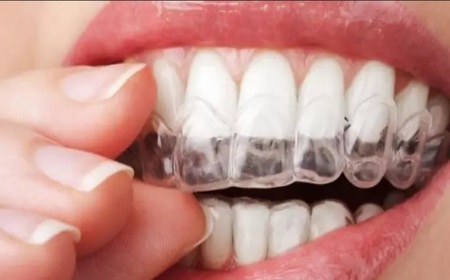
JOINT PLAQUE TREATMENT
16 February 2024
NIGHT DENTAL PLAQUE
16 February 2024
CAD CAM APPLICATIONS
Computer-aided design (CAD) and computer-aided manufacturing (CAM) have become an increasingly popular part of dentistry over the past 25 years. The technology used both in the dental laboratory and in dentistry can be applied to fillings, veneers, crowns, fixed partial dentures, and implant abutments. CAD/CAM is also used in orthodontics.
To solve the challenges, CAD/CAM technology has been developed. The first challenge is that the restoration is not sufficient, especially for the back teeth. The second challenge was to create natural-looking restorations. The third challenge is to make dental restoration easier, faster and more accurate. In some cases, CAD/CAM technology provides patients with same-day restoration.
Once laboratories receive a digital impression, they can create a stone model from the data and continue with traditional manufacturing or rescan the model for milling. Alternatively, the laboratory can do all design work directly on the computer, based on received designs.
Computer-aided design and manufacturing was developed in the 1960s for use in the aircraft and automotive industries and was applied to dentistry a decade later. Early technology allowed the creation of fillings, veneers, veneers, and crowns. More recently, CAD/CAM systems can provide fixed partial dentures and implant abutments.
In short, in-office dental CAD/CAM systems consist of a handheld scanner, a cart that houses a personal computer along with a monitor, and a milling machine.
The scanner head is placed intraorally over the tooth preparation and the resulting data appears on the screen as 2-dimensional (2-D) or 3-dimensional (3-D) images. Design work is done on the monitor and instructions are sent to a computer-aided machining machine for milling.
The restorations are made of prefabricated porcelain blocks. Options include feldspathic, leucite or lithium disilicate materials, as well as composite blocks. Once the restoration is inspected and approved, it is polished and placed using traditional bonding techniques. Using CAD/CAM technology in dental restorations has numerous advantages over traditional techniques. These benefits include speed, ease of use, and quality.
The quality of CAD/CAM restorations is extremely high because measurements and manufacturing are very precise. CAD/CAM restorations have a natural appearance because the ceramic blocks have a translucent quality that mimics tooth enamel and are available in a wide variety of shades.
Another benefit is that all scans can be stored on the computer; whereas standard models take up space and can break if not stored properly.
